Carbs Inflammation: 7 Science-Backed Truths About How Carbohydrates Trigger or Tame Chronic Inflammation
carbs inflammation
The relationship between carbs inflammation has sparked intense debate among health professionals and patients alike. While carbohydrates often receive blame for triggering inflammatory responses, the reality involves nuanced biochemical pathways that depend heavily on carbohydrate type, processing method, and individual metabolic health. Understanding this connection empowers you to make informed dietary choices that either fuel or fight systemic inflammation.
The Biochemical Link Between Carbs Inflammation and Metabolic Response
Not all carbohydrates interact with your immune system identically. The inflammatory potential of any carbohydrate source depends on its glycemic load, fiber content, and degree of processing. When you consume refined carbohydrates, your blood glucose spikes rapidly, triggering an insulin surge that activates pro-inflammatory cytokines like interleukin-6 and tumor necrosis factor-alpha.
According to guidelines from the American Journal of Clinical Nutrition, repeated blood sugar spikes create oxidative stress within cells. This metabolic stress activates nuclear factor-kappa B (NF-κB), a protein complex that controls inflammatory gene expression. Over time, this chronic activation establishes a baseline inflammatory state throughout your body.
Conversely, complex carbohydrates containing intact fiber matrices produce gradual glucose release. This steady energy delivery prevents the inflammatory cascade associated with rapid insulin fluctuations. The fiber component also feeds beneficial gut bacteria that produce short-chain fatty acids—particularly butyrate—which actively suppress inflammatory pathways in intestinal cells.
Inflammatory Carbohydrates: The Primary Culprits
Refined Grains and Carbs Inflammation Mechanisms
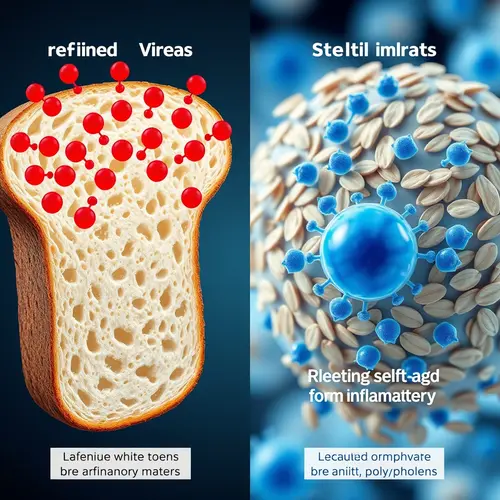
White flour products, white rice, and processed cereals strip away the bran and germ layers during milling. This removes fiber, B vitamins, and phytonutrients while concentrating pure starch. Your digestive system breaks down these naked starches into glucose within minutes, creating the inflammatory blood sugar roller coaster.
Research published by the Harvard School of Public Health demonstrates that populations consuming high quantities of refined grains show elevated C-reactive protein (CRP) levels—a primary biomarker for systemic inflammation. The refined grain-inflammation connection strengthens particularly among individuals with insulin resistance or metabolic syndrome.
Added Sugars and Advanced Glycation End Products
High-fructose corn syrup, table sugar, and concentrated fruit syrups trigger inflammation through multiple pathways. Fructose metabolism in the liver produces uric acid, which stimulates inflammatory pathways independent of blood glucose changes. Additionally, the combination of sugar with proteins during cooking or processing forms advanced glycation end products (AGEs)—compounds that directly damage tissues and activate inflammatory receptors.
The Dietary Guidelines for Americans recommend limiting added sugars to less than 10% of daily calories specifically due to their inflammatory potential and metabolic disruption.
Anti-Inflammatory Carbohydrate Strategies
Whole Grains That Combat Carbs Inflammation
Steel-cut oats, quinoa, bulgur wheat, and barley retain their complete fiber structure and phytonutrient profile. These intact grains deliver sustained energy while actively reducing inflammatory markers. The soluble fiber beta-glucan found in oats specifically lowers interleukin-6 production according to immunology research.
Beyond fiber content, whole grains provide polyphenols and lignans—plant compounds with direct anti-inflammatory properties. These molecules neutralize free radicals and inhibit cyclooxygenase enzymes responsible for producing inflammatory prostaglandins.
Resistant Starch and Gut Microbiome Support
Cooled potatoes, green bananas, and legumes contain resistant starch that escapes digestion in your small intestine. This starch reaches your colon intact, where beneficial bacteria ferment it into butyrate and other short-chain fatty acids. Butyrate strengthens intestinal barrier function, preventing lipopolysaccharide leakage that triggers systemic inflammation.
A practical troubleshooting scenario: If you experience inflammatory flares after eating potatoes, try this approach. Cook potatoes thoroughly, refrigerate them overnight, then consume them cold or gently reheated. This cooling process converts regular starch into resistant starch, dramatically reducing the glycemic impact and inflammatory potential.
The Glycemic Index Versus Glycemic Load Distinction
Understanding the difference between glycemic index (GI) and glycemic load (GL) clarifies the carbs inflammation relationship. Glycemic index measures how quickly a food raises blood sugar compared to pure glucose. Glycemic load accounts for both the GI and the actual carbohydrate content in a typical serving.
Watermelon has a high GI of 76, yet its low carbohydrate density per serving creates a modest GL of only 5. This explains why watermelon rarely triggers significant inflammatory responses despite its high GI rating. Focus on glycemic load rather than index alone when planning anti-inflammatory meal patterns.
Individual Variation in Carbohydrate Inflammatory Response
Genetic polymorphisms in glucose transporter genes and insulin receptor sensitivity create substantial individual variation in carbohydrate tolerance. The Personalized Nutrition Project at the Weizmann Institute demonstrated that identical foods produce vastly different glycemic responses across individuals based on gut microbiome composition and metabolic phenotype.
Two people consuming the same whole wheat bread may experience opposite inflammatory outcomes. One person’s microbiome efficiently processes the grain components into anti-inflammatory metabolites, while another’s gut bacteria produce inflammatory byproducts from the same food. This explains why universal dietary recommendations often fail—personalized approaches based on individual metabolic response prove more effective.
Practical Carbohydrate Selection for Inflammation Management
| Food Category | Pro-Inflammatory Choices | Anti-Inflammatory Alternatives | Key Mechanism |
|---|---|---|---|
| Breakfast Grains | Corn flakes, instant oatmeal | Steel-cut oats, muesli | Fiber preservation, slower glucose release |
| Bread Products | White bread, bagels | 100% whole grain sourdough | Fermentation reduces phytic acid, lowers GI |
| Rice Varieties | White jasmine rice | Brown rice, wild rice blend | Bran layer contains anti-inflammatory compounds |
| Pasta Options | Regular semolina pasta | Legume-based or whole grain pasta | Protein content moderates blood sugar spike |
| Snack Foods | Crackers, pretzels | Raw vegetables, hummus | Nutrient density, fiber content |
Timing and Combination Strategies for Carbs Inflammation Control
The inflammatory impact of carbohydrates diminishes significantly when consumed alongside protein, healthy fats, or vinegar. These combinations slow gastric emptying and carbohydrate absorption, flattening the blood glucose curve. Adding two tablespoons of apple cider vinegar to a high-carb meal can reduce the glycemic response by up to 20% according to metabolic studies.
Exercise timing also modifies carbohydrate inflammatory potential. Consuming carbohydrates within the two-hour post-workout window directs glucose into muscle glycogen replenishment rather than triggering inflammatory pathways. Your muscles become insulin-independent during this period, absorbing glucose without the inflammatory insulin surge.
Debunking the “All Carbs Are Inflammatory” Myth
A dangerous oversimplification circulating through wellness communities claims all carbohydrates promote inflammation. This absolutist view ignores the substantial body of evidence demonstrating that specific carbohydrate sources—particularly those rich in polyphenols and fiber—actively reduce inflammatory markers.
Mediterranean populations consuming substantial quantities of whole grains, legumes, and starchy vegetables consistently demonstrate lower inflammatory biomarkers and reduced chronic disease rates compared to low-carb Western populations. The quality, processing method, and food matrix surrounding carbohydrates matter infinitely more than macronutrient category.
Actionable Implementation Steps
- Audit your pantry: Remove products listing “enriched flour” or “refined grain” in the first three ingredients
- Apply the 5:1 rule: Choose grain products with at least 5 grams of carbohydrate for every 1 gram of fiber
- Pre-prepare resistant starch: Batch cook potatoes, rice, and pasta, then refrigerate overnight before consumption
- Monitor personal response: Track energy levels and joint comfort after different carbohydrate sources to identify your individual triggers
- Prioritize intact whole foods: Select carbohydrates that still resemble their original plant form—minimize processing steps
- Combine strategically: Never consume high-glycemic carbohydrates in isolation; always pair with protein or healthy fat
- Time carbohydrate intake: Concentrate denser carbohydrate sources around physical activity when insulin sensitivity peaks
Expert Perspective on Context-Dependent Inflammation
After working with thousands of patients managing inflammatory conditions, a critical pattern emerges: context determines outcome. A patient with controlled blood sugar and healthy gut microbiome often tolerates moderate amounts of whole grain products without inflammatory consequences. The same foods trigger severe inflammatory responses in someone with insulin resistance or dysbiosis.
This observation challenges the one-size-fits-all dietary dogma dominating nutrition discourse. Rather than universally eliminating carbohydrates, the therapeutic approach involves identifying individual tolerance thresholds, healing metabolic dysfunction, and selecting carbohydrate sources that support rather than sabotage inflammatory balance.
The carbs inflammation connection represents a modifiable risk factor for chronic disease when approached with biochemical understanding rather than dietary extremism. By selecting minimally processed carbohydrates with intact fiber structures, timing consumption strategically, and monitoring individual response patterns, you transform carbohydrates from inflammatory triggers into therapeutic tools that support metabolic health and systemic inflammation control.