Medication Safety for Older Adults: A Practical Checklist

Medication safety changes with age because the body processes drugs differently and because the average older adult manages several prescriptions at once. Kidney and liver function slow down, body composition shifts, and a dose that worked at fifty may behave differently at seventy. Good medication safety starts with a practical review routine, the questions to ask a pharmacist, and the warning signs that deserve a call rather than a web search.
This article is education, not diagnosis or medical advice. Never stop, start, or change a prescribed medicine without speaking to your clinician or pharmacist. Use the checklist with a caregiver or family member when possible, and bring the list to every appointment.
Why Safety Changes With Age
Older adults often take more medicines, see more specialists, and fill prescriptions at more than one pharmacy. Each new prescriber may not see the full list, which increases the chance of duplicate therapy or an interaction. Age-related changes in kidney function can also make a standard dose accumulate faster.
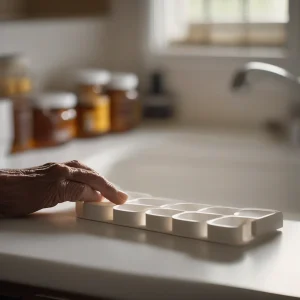
Memory and vision changes add another layer. A person may skip a dose, take it twice, or misread a label. Pill organizers, alarms, and large-print labels help, but they work best when the medication list itself is accurate and current.
Medication Safety: The Brown-Bag Review
A brown-bag review means bringing every medicine you take to one appointment, ideally in the original containers. Include prescriptions, over-the-counter products, vitamins, herbal supplements, creams, eye drops, and anything used only occasionally. The pharmacist reviews the whole collection for duplicates, interactions, and medicines that are no longer needed. This one medication safety habit catches problems that a quick glance at a label cannot.
- Gather every container, including expired items and supplements.
- Write down the dose, how often you take it, and who prescribed it.
- Schedule a pharmacist consultation and say you want a brown-bag review.
- Ask which medicines are still necessary and which can be simplified.
- Update the written list, then share it with every prescriber.
Medication safety works best as a shared routine, not a solo memory test. Do this at least once a year, and treat medication safety as an ongoing habit rather than a one-time task. and again after a hospital stay or a new diagnosis. Bring the list to urgent care and the emergency department. A current list helps clinicians avoid a dangerous guess.
Medication Safety Review Checklist
Use this medication safety review checklist before a scheduled appointment, after a hospital stay, or when a new prescription enters the routine. The goal is to catch duplicates, outdated directions, and avoidable interactions before they cause a problem.
| Review area | What to check | Who can help |
|---|---|---|
| Full medication list | Prescriptions, over-the-counter products, vitamins, herbal supplements, creams, eye drops, and occasional pain relievers | Pharmacist or caregiver |
| Duplicate therapy | Two products for the same condition or two versions of the same drug | Prescriber and pharmacist |
| Dose and timing | Age-related kidney function, missed doses, and whether directions still match the current plan | Clinician or pharmacist |
| Interactions | Food, alcohol, supplements, and medicines prescribed by different clinicians | Pharmacist |
| Storage and expiry | Heat, humidity, damaged labels, and products that have changed color or texture | Pharmacist or caregiver |
| New symptoms | Dizziness, confusion, unusual drowsiness, falls, rash, or trouble breathing | Clinician the same day |
How often to repeat the review
Schedule a full review at least once a year. Repeat it after every hospital discharge, new diagnosis, new prescription, or change in specialist. Add a review when a supplement or over-the-counter product becomes part of the daily routine.
Bring the updated list to every appointment and keep a copy in a wallet or phone. A caregiver should have the same version so everyone works from one source of truth.
What to bring to the review
Bring the original containers when possible, not just a handwritten list. Include products used only occasionally, such as allergy medicine or sleep aids. Ask the pharmacist to reconcile the entire collection and write down what changed.
If a medicine is no longer prescribed, set it aside for safe disposal instead of leaving it in the cabinet. Confirm the disposal instructions with a pharmacist, especially for patches, liquids, and controlled medicines.
7 Essential Medication Safety Rules for Older Adults
These medication safety rules are simple on purpose. The goal is a routine you can repeat on a hard day, not a perfect system that collapses when you are tired.
1. Keep one master medication list
Record the drug name, dose, frequency, prescriber, and reason for use. Include supplements and occasional pain relievers. Update the list whenever anything changes and keep a copy in your wallet or phone.
2. Use one pharmacy when possible
A single pharmacy can screen for interactions across all your prescriptions. If you use more than one, tell each pharmacist about the others and ask them to check the full list together.
3. Review with a pharmacist before adding anything
Supplements, cold remedies, and antacids can interact with prescriptions. Ask before adding, even when the product is sold without a prescription. Bring the package so the pharmacist can see the ingredients.
4. Follow a fixed daily routine
Pair doses with a reliable habit, such as breakfast or brushing your teeth. Use a weekly organizer and an alarm if needed. A routine reduces missed doses and accidental double doses.
5. Store medicines correctly
Keep medicines dry, away from heat, and out of reach of children and pets. The bathroom cabinet is often too humid. Check expiration dates every few months and set aside anything that has changed color or texture.
6. Ask about food, alcohol, and timing
Some medicines work better with food, while others must be taken on an empty stomach. Alcohol can intensify drowsiness or affect blood pressure and blood sugar. Ask for written instructions you can read at home.
7. Review after every hospital stay or new prescription
Transitions are high-risk moments. Ask the discharging team to reconcile the list, then confirm with your primary care clinician. Bring the updated list to the next pharmacy visit and discard medicines that are no longer prescribed.
Check Interactions, Supplements, and Food
Medication safety is not limited to prescription drugs. A common supplement can change how a blood thinner works, and a decongestant can raise blood pressure. Food matters too: some medicines absorb differently with dairy, while others interact with grapefruit or leafy greens.
Write down what you eat and drink when a new symptom appears. A pharmacist can review the timing and suggest adjustments. Do not assume that natural means harmless, and do not assume that two products prescribed by different doctors are automatically compatible.
Interaction red flags to discuss
| Situation | Why it matters | What to do |
|---|---|---|
| New supplement | May change absorption or bleeding risk | Ask the pharmacist before adding |
| Two drugs for the same condition | Possible duplicate therapy | Ask both prescribers to reconcile |
| New dizziness or confusion | Could be a side effect or interaction | Call the clinician, do not self-adjust |
| Recent hospital discharge | List may have changed | Request a written reconciliation |
| Alcohol use | Can worsen drowsiness or blood pressure | Ask about safe limits |
Build a Simple Medication Log
A one-page medication safety log is enough. List each medicine, the time it should be taken, and a small box for each day of the week. Add a column for notes such as missed doses, side effects, or a new symptom. Keep the log where you take your medicine, not in a drawer.
Review the log at each appointment. Patterns are easier to spot when the information is written down. If you use a caregiver, share the log and agree on who updates it. Add a note about herbal products and check herb vitamins and how they interact before combining anything new. The goal is a single source of truth, not a perfect diary.
Travel, Heat, and Storage
Medication safety depends on storage, and heat can damage medicines kept in a car or a hot bathroom. Carry medicine in a bag, not in checked luggage, and keep it in the original labeled container. Ask the pharmacist whether any product needs refrigeration or protection from light.
Before a trip, request enough supply for the entire time away plus a few extra days. Bring a copy of prescriptions and the medication list. If you cross time zones, ask how to adjust dosing schedules. For supplement quality, check the FDA dietary supplement guide before buying anything new.
Questions to Ask Your Pharmacist
- Is this dose appropriate for my age and kidney function?
- Does this interact with any supplement, food, or alcohol?
- Which side effects should make me call the clinic?
- Can any medicines be simplified or taken at the same time?
- How should I store this, and what if I miss a dose?
- Do I still need every medicine on this list?
Write the answers down and keep them with the log. Bring your medication safety questions to every visit, even when you feel fine. For general consumer guidance, the MedlinePlus drug safety guide is a reliable starting point. Share the list with a caregiver, schedule a yearly review, and treat every new prescription as a reason to update the plan. Good medication safety is a habit built in small, repeatable steps.
When to Call Instead of Waiting
Call a clinician or pharmacist the same day if you notice new confusion, unusual drowsiness, a fall, a rash, or trouble breathing after starting a medicine. These signs can have many causes, and only a professional can tell whether a drug, an interaction, or another condition is responsible.
Do not wait for a scheduled appointment when symptoms are severe or worsening. In an emergency, call local emergency services. Bring the medication list and the containers if you go to urgent care. Clear information helps the team act faster and avoid a dangerous guess.
Keep a short note about what changed, when it started, and what you ate or drank around the same time. This timeline is often more useful than a general description.
Ask a caregiver to help track changes if memory or vision is a concern. A second set of eyes can catch a missed dose or a duplicate bottle before it becomes a problem. Write the date and time of any call, the advice you received, and any instruction to stop or adjust a medicine. Keep that note with the log so the next clinician can see the sequence.
FAQ
What is a brown-bag medication review?
It is an appointment where you bring every prescription, over-the-counter product, vitamin, and supplement in its original container. A pharmacist checks for duplicates, interactions, and medicines you no longer need. Update your written list afterward and share it with every prescriber.
Can supplements interact with prescription medicines?
Yes. Herbal products, minerals, and high-dose vitamins can change how a drug is absorbed or metabolized, and some increase bleeding risk. Tell your pharmacist about every supplement, including those you take only occasionally, before you combine them with a prescription.
What should I do with expired medication?
Check the expiration date and ask a pharmacist whether the product is still safe to use. Many communities offer take-back programs or mail-back envelopes, and some pharmacies provide them at the counter. Do not flush medicines unless the label or official guidance says to.