Why Fatty Acids in Food Are the Backbone of Modern Nutrition
Fatty acids in food fall into four practical buckets once labels get sorted: saturated, monounsaturated, polyunsaturated (split into the essential omega-3 and omega-6 families), and the industrial trans fats you want at zero. Learn the four buckets once and every ingredient list turns into a two-minute read — no textbooks required. This guide maps common foods into those buckets and shows how a typical week covers the fats that matter while skipping the one that does not.
The four buckets, with their shelf examples
- Saturated fat — solid at room temperature: butter, cheese, full-fat dairy, fatty meat, coconut and palm oil. Modern dietary advice keeps it lower on the plate without demonizing every gram — the overall pattern matters more than per-cookie arithmetic.
- Monounsaturated fat — liquid or creamy: olive oil, avocado, most nuts. This is the oleic-acid family the body can also manufacture, prized mainly for what it displaces and for how good the food tastes.
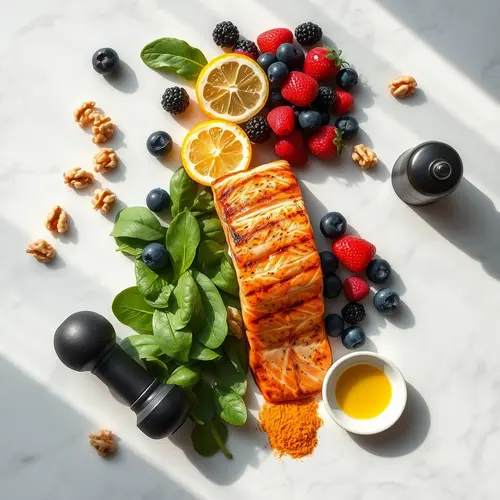
- Polyunsaturated fat — the double-bond family, split into the two essential classes: omega-6 (linoleic acid from soybean, sunflower, and corn oils, nuts, seeds) and omega-3 (ALA in flaxseed, chia, walnuts; EPA and DHA in salmon, sardines, mackerel).
- Trans fat — industrially hardened fats from partial hydrogenation. Zero remains the reading target; the phrase “partially hydrogenated oil” anywhere on a label is the red flag.
The NIH Office of Dietary Supplements reference page anchors the omega-3 side of this map, while omega-6 intakes and sources are detailed in our omega 3 linoleic acid guide.
Reading an ingredient list the fast way
Annotations read weight-first — the list is already printed in descending order. A product fronted by olive or canola oil differs in kind from one fronted by a partially hydrogenated fat, and a snack whose first three lines are sugar and refined starch speaks for itself regardless of its oil. Total fat, saturated fat, and trans fat form the sanity triangle on the nutrition panel; the omega specifics live in the ingredient details when shown.
Two habits are worth the small lesson. First, “0 g trans fat” legally tolerates small amounts per serving, so the ingredient list remains the honest check. Second, family-number tricks — invented families or omega totals with no EPA/DHA or ALA breakdown — separate nutrition copy from nutrition facts; the omega families guide decodes those in full.
What a week of fatty-acid coverage looks like
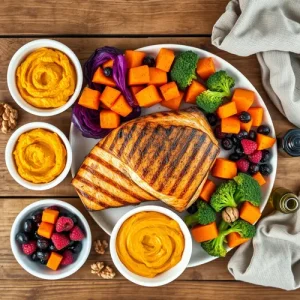
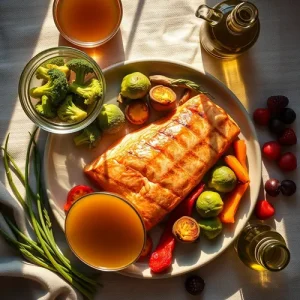
Held as a pattern rather than a spreadsheet: cooking with canola or soybean oil and a drizzle of olive oil where flavor calls; walnuts or ground flaxseed over breakfast bowls most days; fatty fish twice weekly (canned sardines and mackerel count fully); and the saturated share arriving inside real foods — cheese on a sandwich, a steak at a restaurant — instead of engineered snacks.
That pattern covers the ALA reference (1.6 g/day for men, 1.1 g/day for women), delivers EPA/DHA from the fish slots, keeps linoleic acid inside its ordinary 5-10%-of-calories zone, and holds trans fat at zero without any formal rule beyond the four buckets.
Common confusions worth clearing
Three repeats come up constantly. “Fat-free means healthier”: only sometimes, since the replacement is often refined carbohydrate, and certain fats belong in the diet by definition. “Omega high equals good”: family identity and dose decide, not the adjective. “All plant oils are omega-3”: only a short list is — the rest contribute mainly oleic or linoleic acids, which is fine but different; the shelf-level split lives in our omega 3 oils guide.
Which bucket is on the plate right now?
Inside the polyunsaturated bucket a quieter question always follows: which essential family is this meal delivering — omega-3 or omega-6? Soybean, corn and sunflower front labels answer omega-6; flaxseed, chia and walnut fronts answer omega-3; fish packaging answers the marine pair. Because both families are required, a week that wanders through all three front types usually does the job. Adding up any ordinary week honestly, the same conclusion appears: the essential fats arrive together when the shopping cart stays whole-food first.
Cooking habits that change the bucket
Two kitchen routines alter fatty acids without touching the grocery list. Home deep-frying reheats the same oil repeatedly, building oxidation products no label prints — swapping that habit for shallow frying in a fresh pour preserves the oil’s intended profile. And baking or broiling fish gently keeps the marine omega-3s on the plate, while heavy charring trades a slice of exactly the nutrient the fish was chosen for. The buckets survive all of it; mild heat simply suits them better than hard reheats.
A 60-second pantry audit to run today
Put the four buckets to work in one pass: pull out your cooking oil, your main spread, your snack potential, and one packaged treat. Read the four ingredient lines in order, name each bucket out loud, and check for “partially hydrogenated” on the treat. Ninety seconds of that practice equals a shelf’s worth of marketing claims, and repeating it once a season keeps the pantry aligned without any spreadsheet or app doing the remembering.
Bottom line
Food fatty acids stop being mysterious after one pass through the four buckets: keep industrial trans fat at zero, treat saturated fat as a quantity dial, lean mostly on monounsaturated and polyunsaturated sources — and inside the polyns, cover both essential families without drama. From there the week’s plan writes itself, and a label becomes thirty seconds, not an argument.
Primary reference used for amounts and definitions: NIH Office of Dietary Supplements — Omega-3 Fatty Acids (Consumer Fact Sheet).
What are the main types of fatty acids in food?
Four practical buckets: saturated (butter, cheese, coconut oil), monounsaturated (olive oil, avocado, nuts), polyunsaturated split into omega-6 (linoleic acid) and omega-3 (ALA from plants, EPA and DHA from fish), and industrial trans fat — the only bucket you want at zero.
Which fatty acids are essential?
Only two: ALA, the plant omega-3, and linoleic acid, the omega-6. The body cannot synthesize either, so both must come from the diet; everything else — including omega-9 oleic acid — can be built internally.
How do I check a label for good fats?
Read the ingredient list in weight order (it is pre-sorted), confirm that partially hydrogenated oils stay absent, check the trans-fat line reads zero, and look for an EPA/DHA or ALA breakdown whenever omega wording appears.